Maui Tap Water: Where It Comes From and How to Filter It at Home
Maui’s water is tested by the county and treated before it reaches your home. Still, many families here filter their water, and the reasons are practical: the taste and smell of disinfectant, sediment after heavy rain, older plumbing, and the peace of mind of having a second barrier at the tap.
This guide explains where your water comes from, what is worth filtering, and how to choose a system that fits the way Maui water actually behaves.
Where Maui’s tap water comes from
Maui does not have one water system. The Department of Water Supply runs several, and each one draws from different sources.
Central and South Maui. Wailuku, Kahului, Kihei and Wailea are served mostly by groundwater. According to the county’s 2025 water quality report, about 92% of this system comes from wells in the Iao, Waihee and Kahului aquifers. A small share is surface water filtered at the Iao treatment plant.
Upcountry. Makawao, Pukalani, Kula and nearby communities rely much more on surface water from streams and reservoirs. About 68% of the Upcountry supply is surface water, treated at the Kamole, Piiholo and Olinda plants. Surface water changes with the weather, so heavy rain and drought both show up at the tap.
West Maui. Lahaina, Kaanapali and Napili have their own wells and surface water treatment.
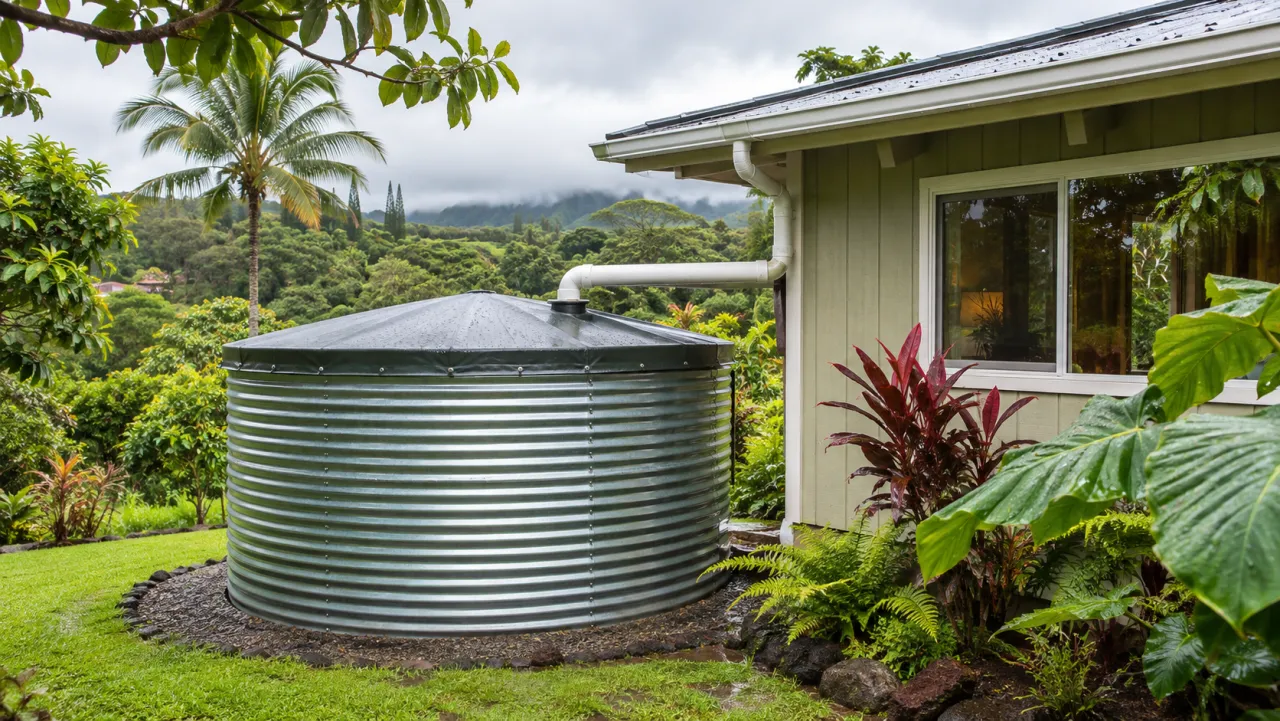
Homes off the county system. Many homes in Haiku, Huelo, Hana and other rural areas use rainwater catchment or private wells. Those systems are not regulated by the State Department of Health, so treatment is up to the owner. We cover them in our rainwater catchment filtration guide.
You can read the latest report for your area on the Maui County Department of Water Supply website. It lists your sources, your disinfectant and every contaminant the county detected.
What is worth filtering in Maui water
Chlorine and chloramine
Public water has to be disinfected so it stays safe all the way through the pipes. On Maui that means chlorine in most systems and chloramine in part of Upcountry, where the Olinda plant has used it. In late 2025 the county proposed moving all three Upcountry plants to chlorine, so check your latest report to see which one you get.
The difference matters when you choose a filter. Standard activated carbon removes chlorine well. Chloramine is more stable and needs catalytic carbon and more contact time, which a large whole house cartridge gives you.
Filtering disinfectant at home does not make your water less safe. It has already done its job by the time it reaches your house. Removing it improves taste and smell and makes showers easier on skin and hair.
Sediment and turbidity
Surface water carries more fine particles, especially after storms. Main breaks and repairs can also stir up sediment in the lines. A sediment stage catches sand, silt and rust before they reach faucets, water heaters and appliances, and it protects the carbon stage behind it so that stage lasts longer.
Volatile organic compounds
After the August 2023 wildfires, the county issued an Unsafe Water Advisory for parts of Upper Kula and Lahaina because fire damage and loss of pressure could pull compounds like benzene into the lines. The advisory was lifted for all of Upper Kula by the end of October 2023 and for the last Lahaina areas in August 2024.
Many families who lived through those months now want a second barrier at home. For volatile organic compounds, the standard home technology is activated carbon. Look for cartridges certified to NSF/ANSI 53 for VOC reduction.
Farming history
Decades of pineapple and sugar farming left traces of old soil fumigants in some Maui groundwater, and some wells have needed carbon treatment or were taken out of service because of them. The State Department of Health names granular activated carbon as the best available technology for these compounds. That is one more reason a good carbon stage is the core of most systems here.
Whole house or just the kitchen tap?
A pitcher or under-sink filter helps with drinking water, but every other tap, shower and appliance in the house still gets unfiltered water. A whole house system, also called point of entry, treats water where it enters the home, so everything downstream gets the same water. We explain the benefits in more detail in why whole-home water filtration matters.
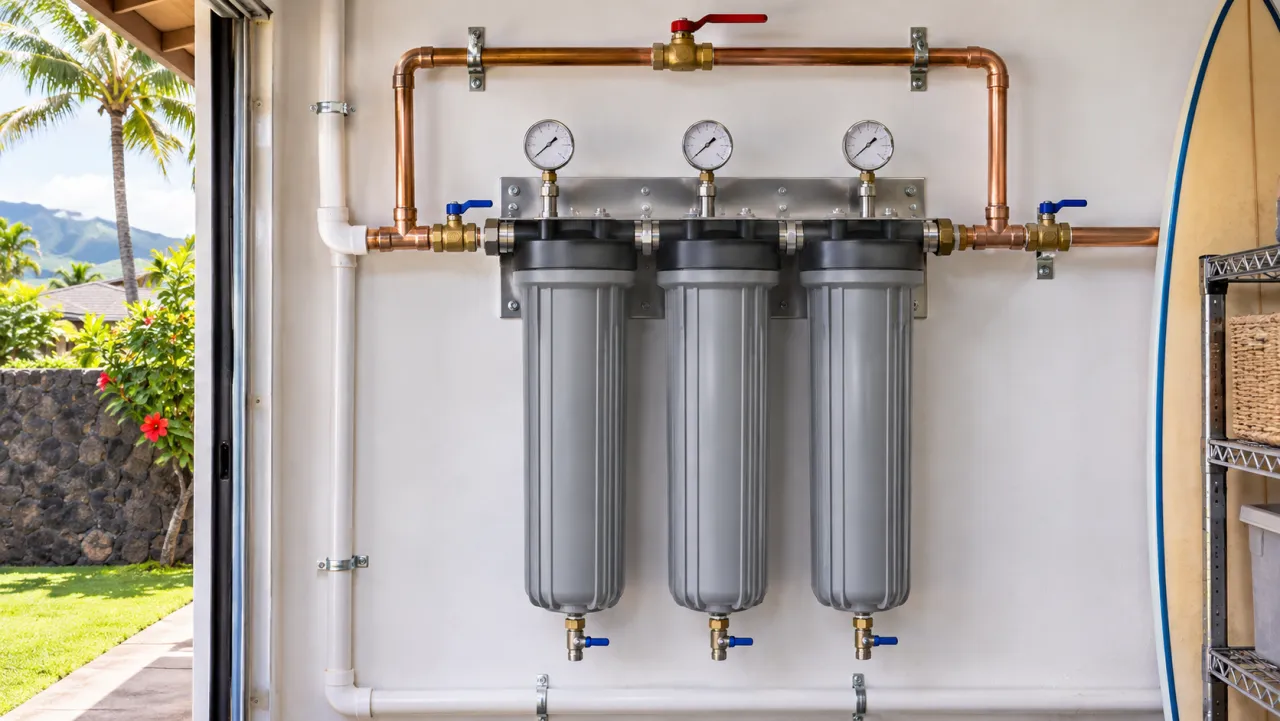
For most Maui homes on county water, a three-stage whole house setup covers the basics:
- Sediment to catch particles and protect the stages after it.
- Carbon for chlorine, taste, odor and VOCs. Use catalytic carbon if your water has chloramine.
- A third stage chosen for your water, such as a second carbon stage for more contact time or a finer sediment filter for Upcountry surface water.
Size the system for your whole household. Large 20-inch housings with 1-inch connections keep water pressure up when the shower, dishwasher and washer run at the same time. Our guide on how to choose a whole house water filter walks through flow rate, certifications and maintenance.
A system built for this
The SILVATTI FILTRI is a three-stage whole house system with 20-inch housings, 1-inch connections and a flow rate of 15 gallons per minute. It has pressure gauges so you can see when a cartridge needs changing and drain valves for clean cartridge changes. The housings are certified to NSF/ANSI 42, 61 and 372 and CSA B483.1.
Not sure what your water needs? Contact us and tell us your town and whether you are on county water, catchment or a well. We will help you pick the right cartridges for your home.
If you own a Kangen water machine, we also offer deep cleaning with pickup and delivery across Maui.
Published November 9, 2026
Back to Blog